Plan your upgrade
Before your next HVAC replacement or costly repair, explore how upgrading can improve efficiency, reduce operating costs, and support building performance needs.
Why upgrade your HVAC system?
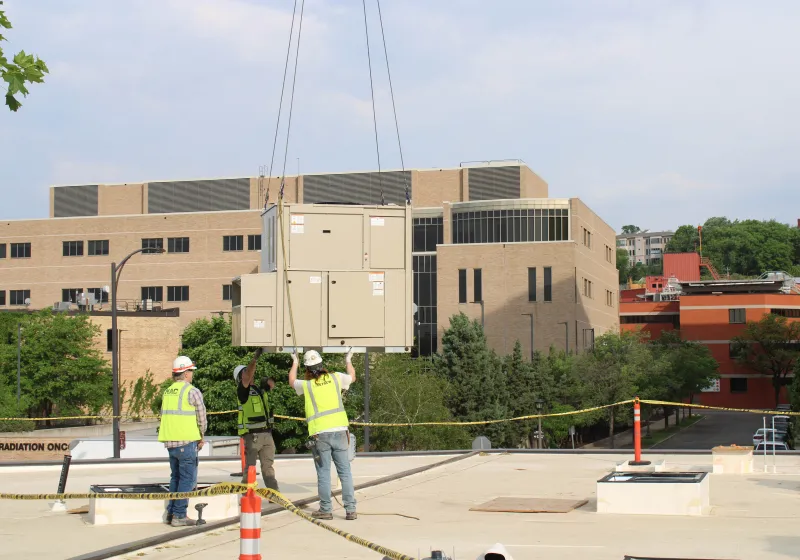
When a rooftop unit fails, most buildings replace it with the quickest available option. Planning ahead gives you the opportunity to improve efficiency, align with long-term goals, and choose the right system for occupants and building needs.
What should an upgrade look like?
Planning for a HVAC replacement starts with understanding when an existing unit has reached the end of its useful life, often between 15 to 20 years. Some facilities replace equipment on a fixed schedule, others make replacement decisions on performance and overall wear of the unit. Working with your maintenance team or service provider to understand the equipment’s performance and identifying efficiency loss can help determine how long a unit should continue serving a building.
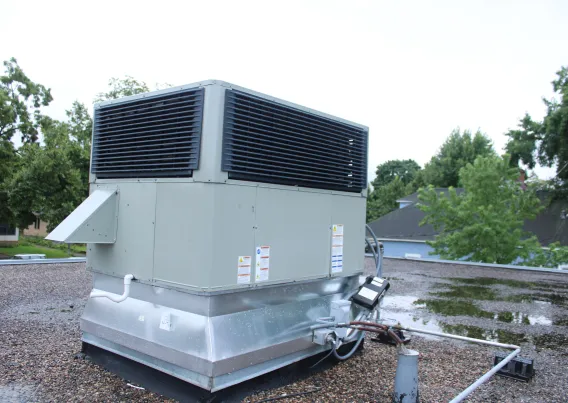
Once it has been determined the unit needs replacement, a dual fuel heat pump rooftop unit (RTU) equipped with an energy recovery ventilator (ERV) provides a flexible, efficient, and reliable solution.
Reasons to choose a dual fuel heat pump RTU
- Reduce energy consumption and operating costs
- Lower emissions while maintaining comfortable temperatures year round
- Switch between electric and gas
- Eligible for incentives and financing
When a bolt on or integrated ERV makes sense
- Buildings with high ventilation needs
- Spaces looking for improved indoor air quality
- Facilities looking to reduce energy loads with ventilation
- Reduced upfront cost with incentives
Emergency replacement versus planned upgrade
Planned upgrade
✓ Evaluate equipment performance and building needs
✓ Electrification options
✓ Improve efficiency, comfort, and indoor air quality
✓ Manage costs proactively instead of reactively
Emergency replacement
✗ Limited time, limited options
✗ Like-for-like replacement
✗ Higher energy costs overtime
✗ No considerations for ventilation or occupant comfort
Plan ahead: lifecycle and cost preparedness
A planned HVAC replacement puts you in control. By understanding your equipment's lifecycle and budgeting in advance, you can avoid emergency decisions, explore incentives, and choose a solution that aligns with your building goals.